"How long will my child be in treatment?" is one of the very first questions parents ask us, and it's a fair one. The honest answer is that it depends — but understanding how orthodontic treatment for kids actually unfolds, from the first evaluation all the way through retention, can turn a vague timeline into something concrete you can plan around.
At Dexter Orthodontics, every child's treatment plan is different, but the overall journey tends to follow the same basic phases. Here's what that path typically looks like.
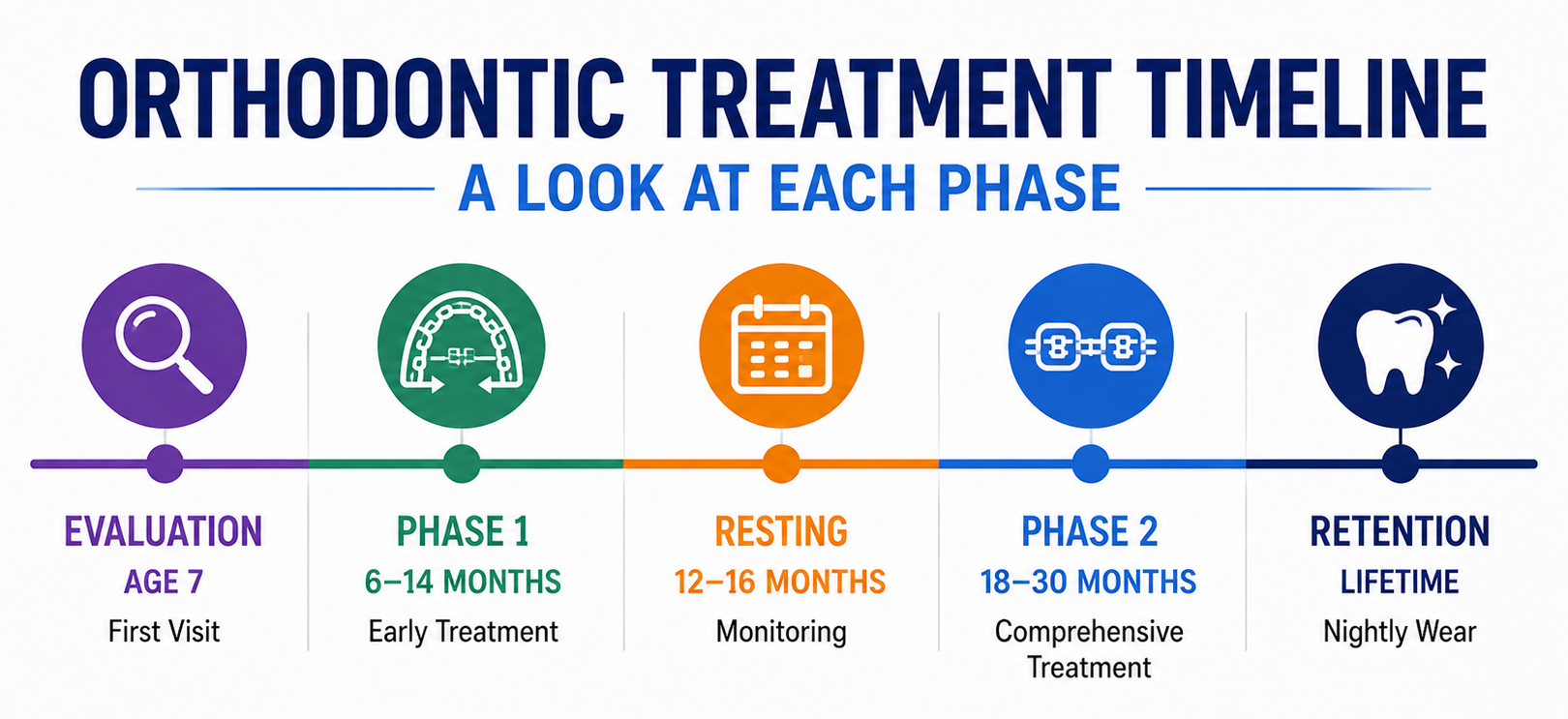
The American Association of Orthodontists recommends a first orthodontic evaluation around age 7. That doesn't mean treatment begins right away — for many kids, it doesn't. This first visit simply tells us whether your child would benefit from early treatment now or is better served by waiting until more permanent teeth have come in.
Not every child needs Phase 1 Treatment, but for kids with moderate to severe issues — like significant crowding, a crossbite, or a jaw growth problem — starting early can make a real difference. Phase 1 typically begins between ages 6 and 10 and lasts 6 to 14 months. The goal isn't a perfect smile yet; it's guiding jaw growth and creating room for permanent teeth while your child still has the growth on their side.
After Phase 1, most kids enter a resting phase rather than moving straight into more treatment. This is a period of monitoring, usually lasting 12 to 16 months, while the remaining permanent teeth erupt naturally. We'll see your child every 4 to 6 months during this stretch to track progress and determine the right time for the next phase.
Once most permanent teeth have come in, roughly 90% of Phase 1 patients move into Phase 2 Treatment. This is the stage most people picture when they think of braces or Invisalign — full alignment of the teeth and bite. Phase 2 generally takes 18 to 30 months. If your child never needed Phase 1, they'll typically move straight into this stage instead, often called Comprehensive Treatment, once most of their permanent teeth have erupted, usually between ages 10 and 14.
A few things influence how long treatment takes for any individual child:
Of these, compliance is the one families have the most control over. A child who wears their appliances as instructed and shows up for every visit will almost always finish closer to the shorter end of their estimated timeline.
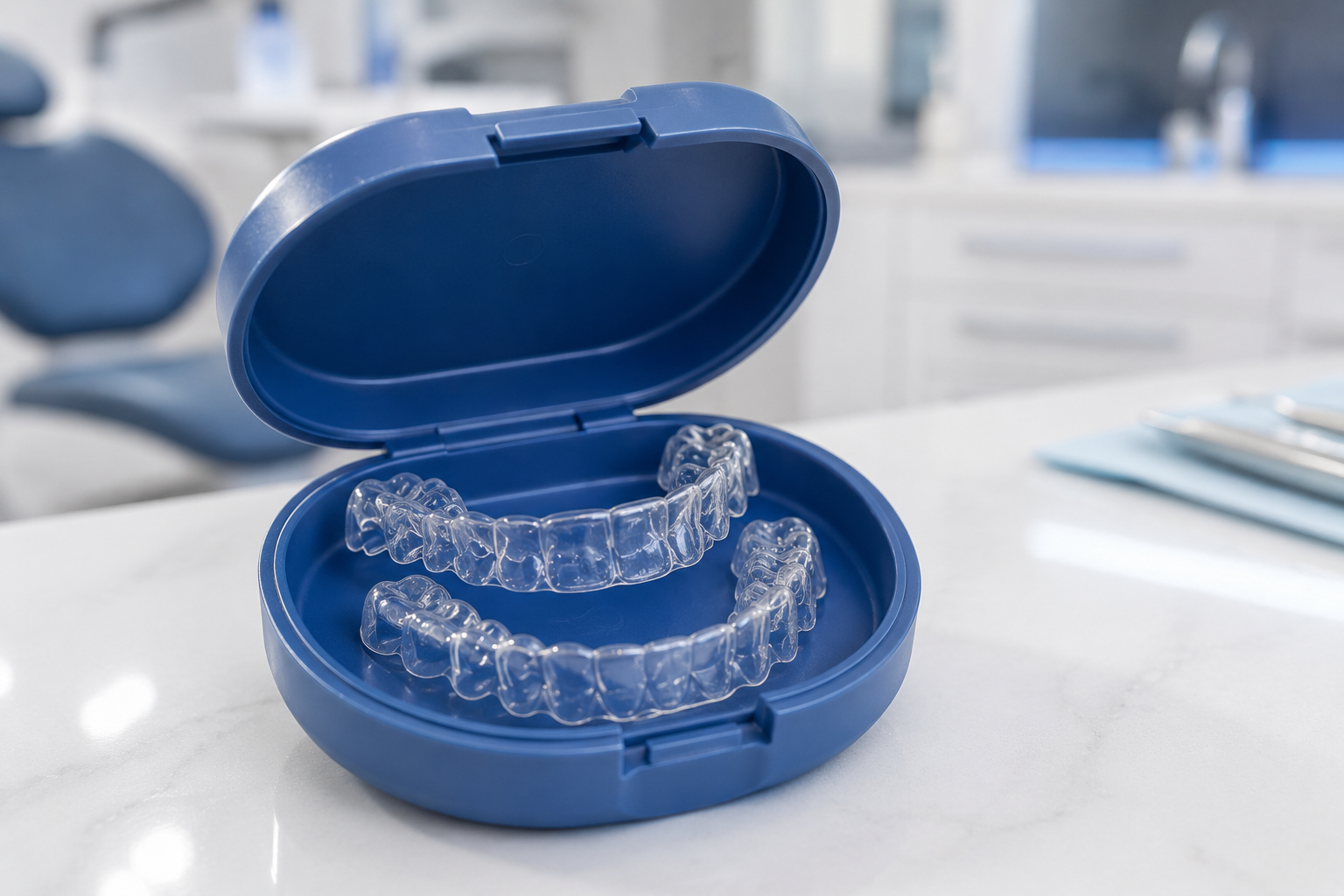
Once braces come off or aligners are complete, treatment isn't quite finished. Retainers are what keep teeth from drifting back toward their original position. Most kids wear retainers full-time for a few months, then transition to nightly wear long-term. This final phase is just as important as the active treatment that came before it — skipping it is the most common reason results don't last.
Every child's timeline looks a little different, and the only way to know what to expect for yours is a personal evaluation. If you're wondering whether your child is ready for that first visit — or curious how their specific case might unfold — the best next step is a complimentary evaluation, where we can map out a realistic timeline together.
