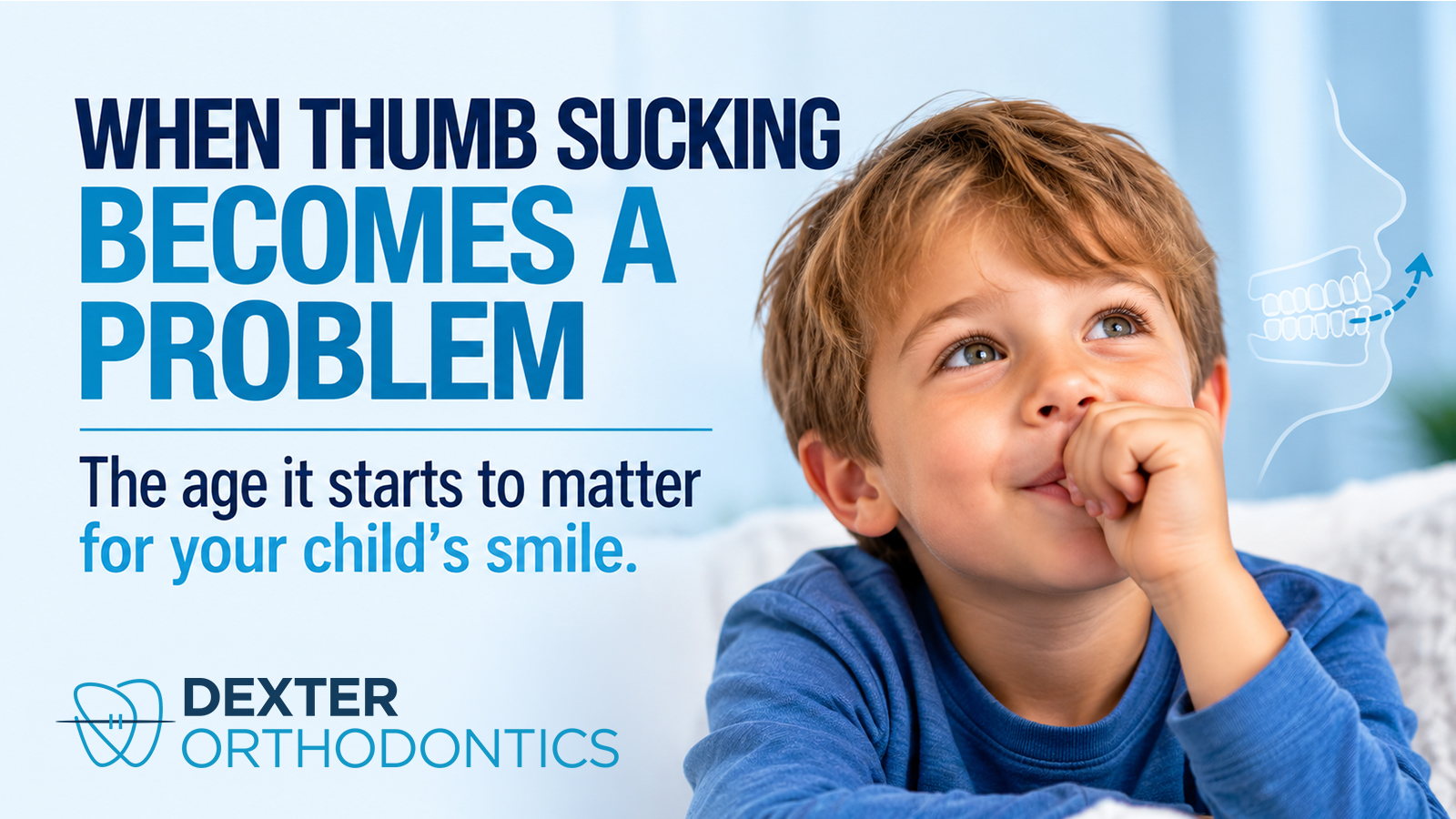
Thumb sucking is one of the first ways babies learn to comfort themselves, and for most families it's a sweet, completely normal part of early childhood. But as a child gets older, many parents start to wonder: is this still okay, or is it quietly changing my child's teeth?
At Dexter Orthodontics, we get this question often, and the honest answer depends on a few things: your child's age, how often they suck their thumb, and how hard. Here's what research shows about when thumb sucking starts to matter, what it can do to a growing smile, and how to help your child let it go.
Sucking is a natural reflex that starts before birth. It soothes babies, helps them fall asleep, and gives toddlers a sense of security when they're tired, bored, or anxious. According to the American Association of Orthodontists, many children stop thumb and pacifier habits on their own somewhere between ages 2 and 4, and in the baby and toddler years the habit usually isn't a cause for concern.
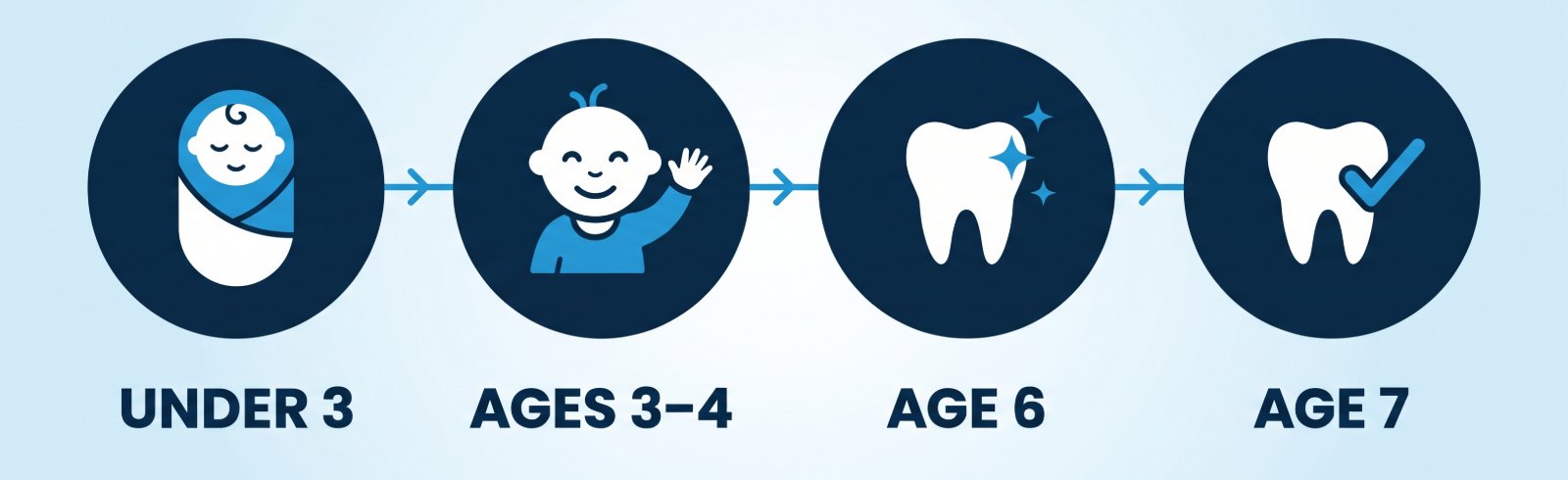
The risk climbs when the habit continues past about age 3 or 4, and especially when it's still going as the permanent front teeth come in around age 6. Three factors matter most:
Pacifiers can cause many of the same changes, which is why pediatric dental organizations recommend talking with your child's dentist if any sucking habit is still going strong after age 3.
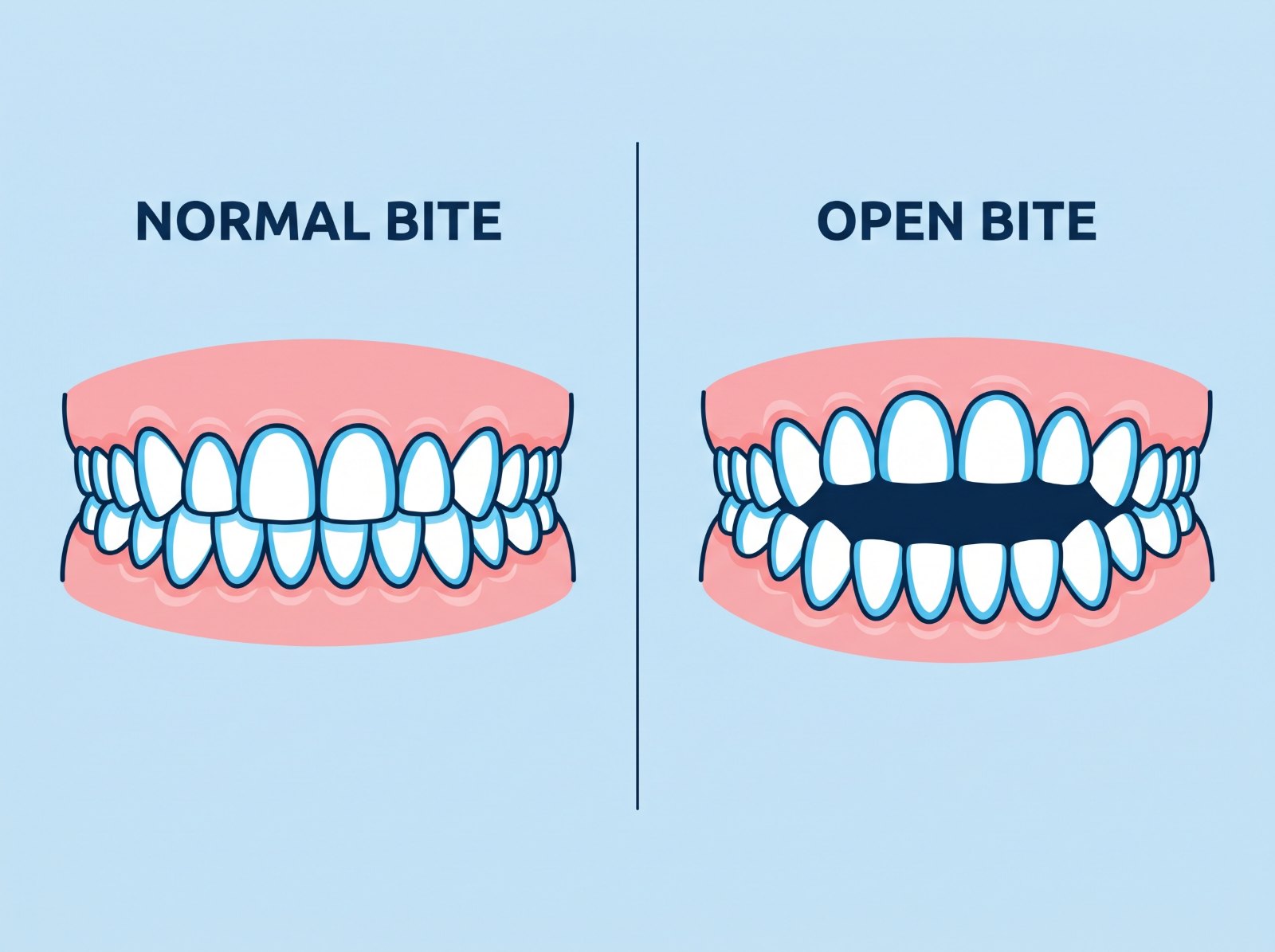
A thumb pushes forward on the upper front teeth and down on the lower ones, while the cheeks press inward on the upper jaw during sucking. Over time, that combination can lead to:
Our Do I Need Braces? page shows how an open bite looks and why we so often see it alongside thumb sucking and tongue thrusting.
If a child stops the habit, the teeth often move back toward a healthier position. A 2023 systematic review in the European Journal of Orthodontics found that open bites self-corrected in 50 to 100 percent of children who quit, including some older than age 4, while children who kept the habit rarely saw that improvement. Changes in the jaw itself, such as a narrow upper jaw, are less likely to fix themselves and may need orthodontic help.

Pressure and punishment tend to backfire, because thumb sucking is usually a response to stress or fatigue. These gentler approaches work better:
If the habit continues or you notice teeth starting to flare, gaps forming, or an uneven bite, it's a good time for an evaluation. Thumb sucking is one of the early warning signs we list on our What Age Should My Child See an Orthodontist? page. When a child truly wants to stop but can't, a small, fixed habit appliance behind the upper teeth can serve as a constant, painless reminder. If the habit has already narrowed the upper jaw, Phase 1 Treatment can guide growth while the jaw is still developing.
If you're unsure whether your child's habit is affecting their teeth, schedule a complimentary orthodontic evaluation and we'll take a look and talk through the best next step for your family.
